

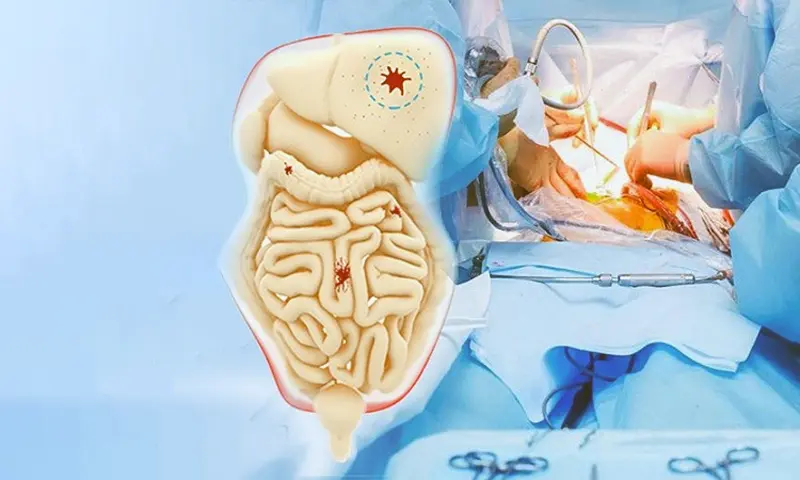
When an Indian family asks “how much does HIPEC cost?” the typical hospital response is a range so wide it’s almost useless. ₹4 lakh to ₹12 lakh. Or “depends on the case.” Or the implicit message that asking about cost is somehow improper when a serious cancer decision is involved.
That’s not how families actually make decisions. The cost matters, the variability matters, and the lack of transparency around it has been a real barrier to families making informed choices. This article is the cost conversation, done honestly.
What you’re actually paying for
A HIPEC procedure isn’t a single item. It’s a bundle of:
- Cytoreductive surgery, the main cancer operation, 4–8 hours of OT time
- HIPEC delivery, the 60–90 minute heated chemotherapy infusion, including the consumables (the HIPEC machine circuit, the chemotherapy drugs, the closed system)
- Anaesthesia, long-duration general anaesthesia with invasive monitoring
- ICU stay, typically 2–4 days for uncomplicated cases
- Ward stay, typically 7–10 additional days
- Medications, analgesics, antibiotics, prophylactics, electrolyte replacement
- Investigations, blood work, imaging during recovery
- Allied services, physiotherapy, nutritional support
The price you’re quoted should be a package covering all of this for an uncomplicated course. What “uncomplicated” means varies. The honest hospitals tell you upfront what triggers additional costs.
The realistic price ranges in 2026
For a complete cytoreductive surgery with HIPEC for Stage III ovarian cancer, with a 10–14 day recovery, at major Indian centres:
Mumbai premium tertiary (Tata Memorial Centre / Hinduja / Kokilaben / similar): ₹10–18 lakh
Mumbai mid-tier tertiary: ₹8–14 lakh
Delhi premium tertiary (AIIMS private / Apollo / Medanta): ₹10–18 lakh
Bengaluru tertiary: ₹8–14 lakh
Chennai tertiary: ₹7–13 lakh
Hyderabad tertiary: ₹7–13 lakh
Ahmedabad tertiary (Sterling Sindhubhavan / KD Hospital / Welcare): ₹6–10 lakh
Kolkata tertiary: ₹7–12 lakh
These are package estimates. They include the standard surgical course described above. They do not typically include premium-suite upgrades, treatment of major complications, blood products beyond a routine allocation, or out-of-pocket investigations done outside the package window.
Public sector pricing, through Tata Memorial Centre or AIIMS, is materially lower for those who qualify, but waiting times for these procedures at public centres are often months long, which is not workable for advanced cancer where treatment timing matters.
Why the prices differ
The variability in cost across cities and centres is not driven primarily by clinical capability. The major factors are:
- Real estate and overhead. Mumbai’s premium tertiary centres have substantially higher per-bed-day costs because of the underlying land and infrastructure costs. Ahmedabad’s equivalent centres can deliver the same clinical care at lower overhead.
- Hospital tier and amenities. Premium suites, private rooms, and luxury amenities add to package prices without adding to clinical outcomes.
- Surgeon’s fees. Senior surgeons at major centres charge meaningful professional fees. The fee structure varies more than is publicly discussed.
- Insurance contracting. Some hospitals have tighter insurance contracts that compress package prices; others have higher list prices that are negotiated case-by-case.
- Anaesthesia and consumables pricing. Differs across cities because of local procurement and supply contracts.
What is not a major driver of the cost difference is clinical outcomes. For appropriately selected patients at experienced sub-speciality centres, surgical outcomes are comparable across major Indian cities. The clinical equivalence is real; the price differential mostly reflects overhead and positioning rather than capability.
What “Ahmedabad is cheaper” actually means in absolute terms
For a family choosing between Ahmedabad and Mumbai for the same procedure, the cost differential in 2026 is meaningful:
HIPEC surgical package: ₹3–8 lakh less in Ahmedabad Family accommodation during 10–14 day post-op: ₹40,000–1,00,000 less in Ahmedabad Travel cost from anywhere in Gujarat / Madhya Pradesh / Rajasthan: substantially less Lost income from family travel and accommodation: substantially less
The total cost difference for a complete treatment course can easily reach ₹5–10 lakh, which materially changes affordability for many families.
For families specifically in Gujarat, HIPEC surgery cost in Ahmedabad compared to Mumbai is the kind of arithmetic that genuinely changes who can access the procedure.
How insurance treats HIPEC
Insurance coverage for HIPEC in India in 2026 has matured. Most major insurers, public and private, cover HIPEC as part of cytoreductive surgery for advanced ovarian cancer. The specific terms vary:
- Cashless cover at network hospitals is available for most major insurers at major tertiary centres
- Reimbursement cover for non-network hospitals usually applies, subject to insurer-specific package caps
- Sub-limits on certain components (ICU per-day caps, room rent caps) can affect total cover
- Pre-existing condition waiting periods typically don’t apply to a new cancer diagnosis (this varies by insurer)
The single most important pre-procedure financial step is obtaining written pre-authorisation from your insurer before surgery. Most reputable hospitals do this routinely; it’s worth confirming directly with your insurer rather than relying on the hospital alone.
Get the insurer’s package cap in writing. Get the hospital’s package estimate in writing. The gap between the two, if any, is your out-of-pocket cost. Knowing this number in advance is materially better than discovering it after surgery.
What about hidden costs
Three categories of cost that families consistently underestimate:
- Complications. A 5–10% rate of major post-operative complication is realistic for HIPEC. Complications add to the total cost, extended ICU stay, additional procedures, additional medications. Reputable insurers cover these, but the cashless approval process can lag, leaving families to front the cost initially.
- Adjuvant chemotherapy. HIPEC is part of a longer treatment course that includes 3–6 cycles of intravenous chemotherapy after recovery. Each cycle costs ₹15,000–40,000 depending on regimen, centre, and insurance coverage.
- Surveillance. Follow-up imaging and blood work over the years after treatment isn’t always packaged with the initial procedure. Annual surveillance cost is moderate but accumulates.
A realistic total cost of HIPEC plus adjuvant chemotherapy plus 5-year surveillance is in the ₹10–20 lakh range at an Ahmedabad tertiary centre, with insurance covering a meaningful but variable proportion.
What to ask before signing
Before consenting to HIPEC at any centre, six cost-related questions worth asking:
- What is the written package estimate for an uncomplicated course?
- What specifically triggers costs above the package? (Complications, blood products beyond X units, ICU beyond Y days, etc.)
- What is your centre’s average actual cost for the last 20 HIPEC cases? (Compares the quoted estimate to reality)
- What is the insurance pre-authorisation status? (Should be confirmed before admission)
- What does the typical out-of-pocket cost look like for patients with my insurance type?
- What financial assistance options exist at this centre? (Some centres have charity assistance for documented financial hardship)
A centre that handles these questions transparently is a centre you can probably trust. A centre that gets defensive about cost is a centre worth asking for a second opinion from.
The bottom line
HIPEC in India in 2026 is no longer a procedure reserved for families who can absorb Mumbai pricing. The Ahmedabad option in particular provides equivalent clinical care, sub-speciality surgeons, multidisciplinary review, ERAS protocols, ICU infrastructure, at 30–50% lower total cost.
For families weighing the decision, the cost differential is real, the clinical equivalence is real, and the transparency around both should be expected from any reputable centre.
If your current quotation looks high for an Ahmedabad procedure or vague for a Mumbai one, get a second opinion. The arithmetic is part of the medical decision, not separate from it.
About the author
This article was authored by Dr. Nishtha Tripathi Patel (MBBS, DGO, DNB, Fellowship in Gynaecological Oncology, ESGO-certified), an ESGO-certified gynaecological oncosurgeon in Ahmedabad performing CRS+HIPEC at Sterling Hospitals (Sindhubhavan). Reach her practice at +91 76988 00333.
